A Viking ring is more than metal and runes — it’s a story forged in history, worn today by modern warriors who honor the sagas The best Viking rings for men blend bold Norse symbols, solid materials like silver or bronze, and quality craftsmanship to give a lasting, meaningful piece.
They show which styles matter next—Valknut, Mjölnir, runes, and knotwork—and explain why material and handwork change feel and durability. This guide will help him pick a ring that fits his style, pairs well with other Norse pieces, and stays strong with simple care.
Why Viking Rings Are Unique for Men
Viking rings stand out for their strong symbols, mythic references, and a bold, functional look. They mix durable metals with designs that link the wearer to history, identity, and contemporary style. At Frosthold, we value rings that tell a story while standing the test of time, linking heritage to modern style
Iconic Symbols and Motifs
Viking rings often show knotwork, runes, and animal motifs like wolves and ravens. Knotwork signals interconnection and skillful metalwork. Runes carved into bands can spell names, virtues, or protection charms in a compact, readable form. Every knot, rune, and animal motif carries meaning — each ring is a miniature saga in your hand
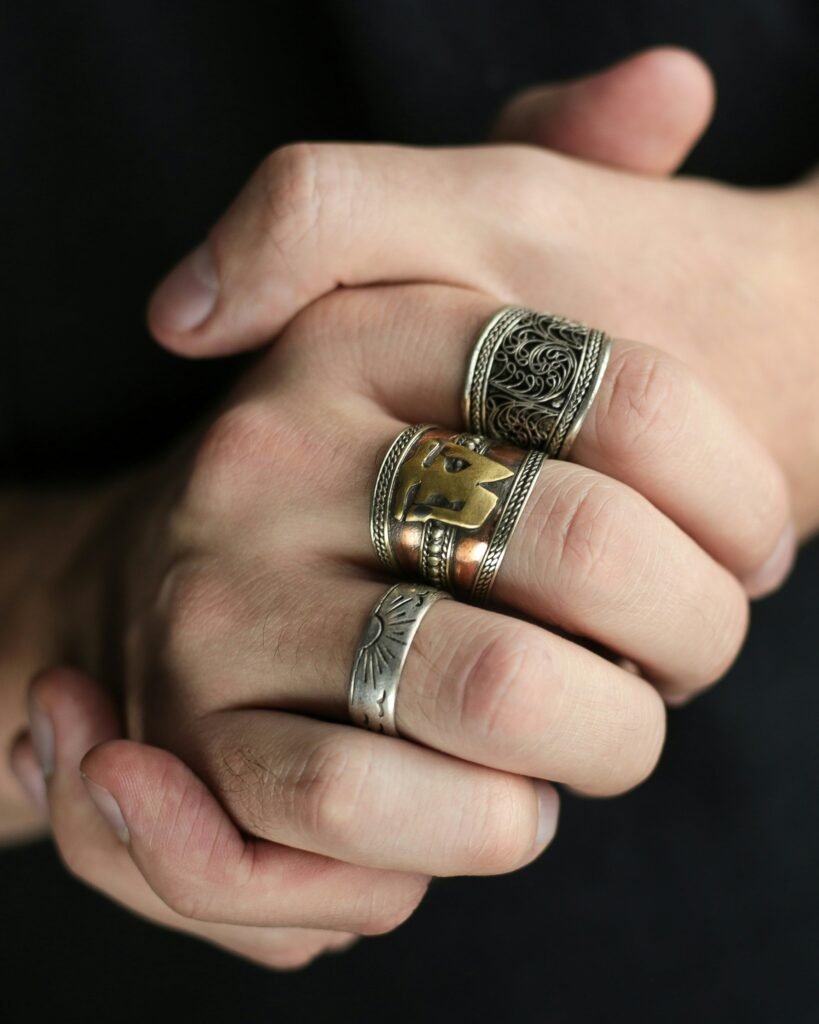
Common motifs include Mjölnir (Thor’s hammer), Valknut triangles, and serpent or dragon patterns. These images appear on both simple silver bands and heavier signet-style rings. Materials matter: silver and bronze match historical pieces, while modern makers add stainless steel and gold for durability and sheen.
Buyers should check for clear symbols and tight engraving. Well-executed motifs resist wear and keep their shape, which matters if the ring is worn daily.
Influence of Norse Mythology on Viking Rings
Norse mythology provides most of the imagery and meaning in Viking jewelry. Gods such as Thor and Odin feature prominently; Thor’s hammer represents protection and strength, while Odin’s ravens suggest wisdom and guidance. Each symbol is a bridge from the Viking age to today, offering protection, guidance, and legacy. These associations give rings a narrative beyond decoration. At Frosthold, we see each raven and rune as a bridge from the Viking age to the present, carrying wisdom, protection, and legacy on your hand.
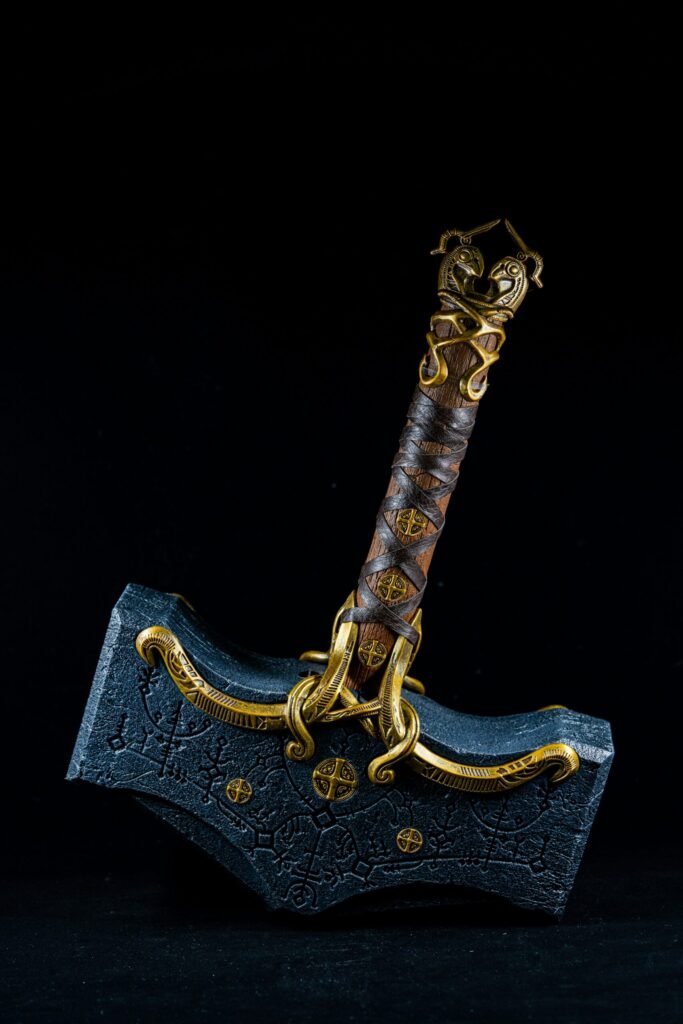
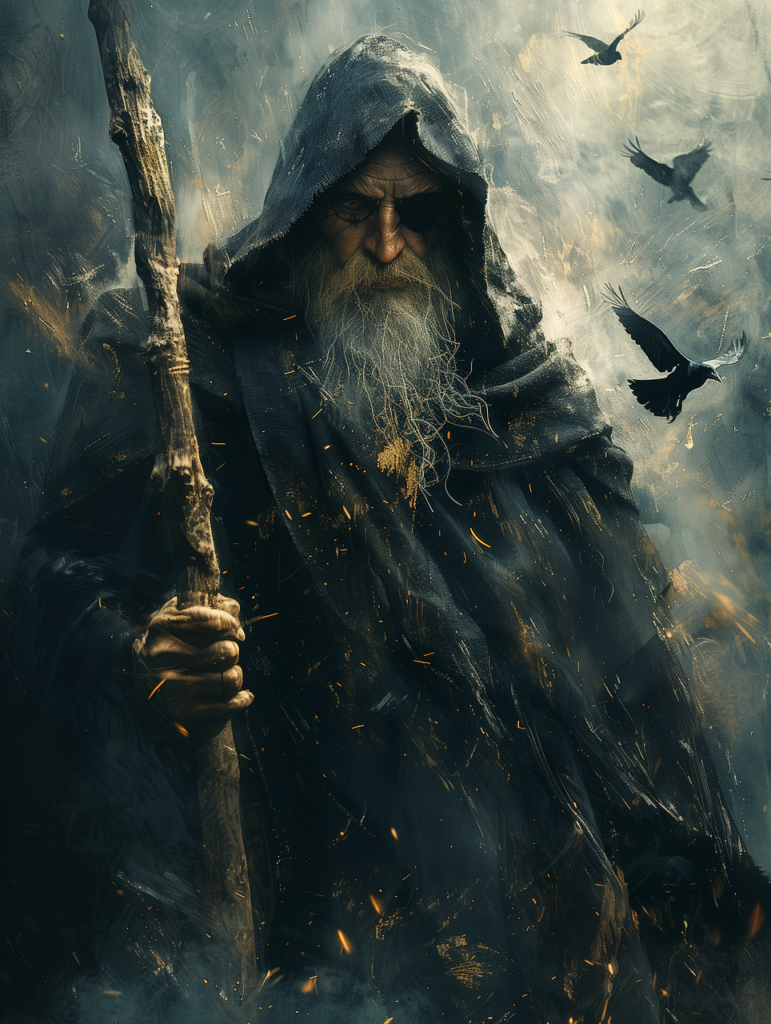
Runes come from the Elder Futhark and often carry specific meanings like “protection,” “victory,” or “journey.” Modern makers use rune sequences carefully to avoid accidental or incorrect messages. Myth-based motifs also guide design choices: a warrior-style ring might use hammer or wolf imagery, while a traveler’s ring could use runes for safe passage.
Collectors value accurate mythic details. Rings that reflect historic sources or well-researched symbolism hold more cultural weight than vague “Viking-style” pieces. Explore our curated Viking rings on the Gear page to find the one that speaks to your saga.
Masculinity & Modern Viking Style in Rings
Modern Viking rings balance ruggedness with refined craftsmanship. They favor broad bands, textured finishes, and bold motifs that read clearly at a glance. This creates a masculine look without relying on cliché; strength comes from proportion and material, not size alone. Modern Viking rings balance ruggedness with thoughtful craftsmanship, a perfect blend for today’s warrior.
Contemporary makers mix old motifs with modern techniques like laser engraving and mixed metals. That keeps pieces wearable in daily life while preserving a Norse feel. Men who want a statement piece often choose signet or wide-band designs; those who prefer subtlety pick thin bands with a single rune.
Practical features matter: comfort-fit interiors, durable alloys, and secure finishes keep a ring wearable. A modern Viking ring aims to be both symbolic and functional for everyday life.
Popular Styles of Viking Rings for Men
These ring styles highlight symbols tied to Norse history, clear motifs, and common materials. Buyers often choose by meaning, design detail, or metal like sterling silver and bronze.
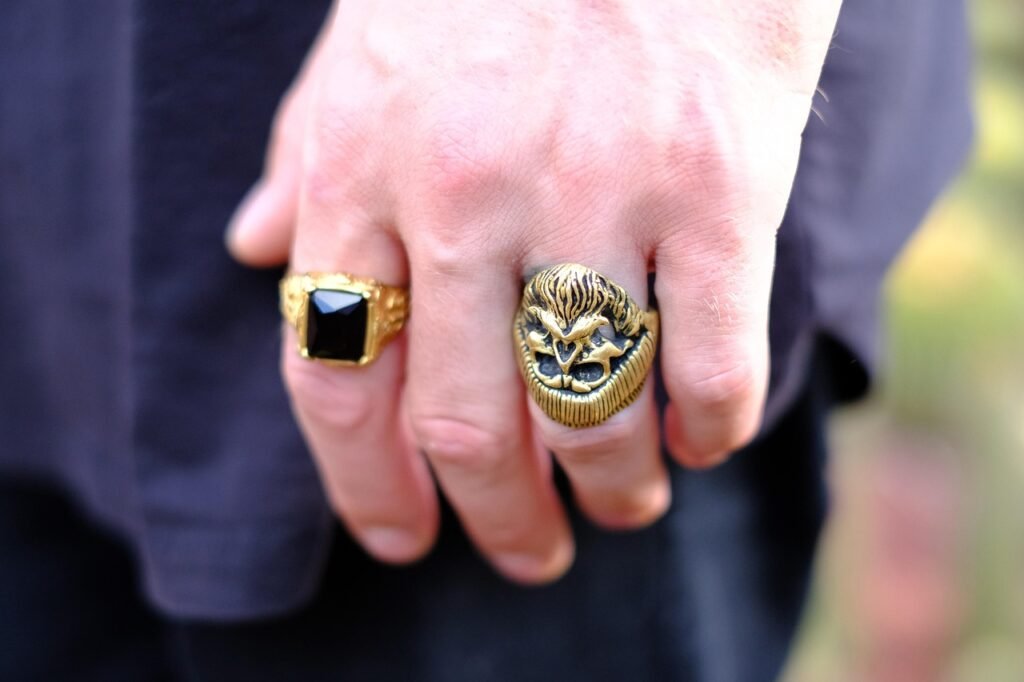
Odin and Norse God Rings
Rings featuring Odin or other Norse gods show clear iconography: Odin’s ravens, Valknut patterns, and one-eyed portraits. They often use deep relief carving to make symbols stand out on silver or bronze bands.
Buyers pick Odin rings for links to wisdom, battle, or leadership. Many designs include runic inscriptions that name Odin or quote short Old Norse phrases. Stones are rare but sometimes used for contrast, such as black onyx or darkened silver.
Crafting matters: hand-engraved pieces look more authentic, while cast mass-market bands keep cost lower. Sizes tend to be wider to allow detailed scenes, so users should check width and weight before ordering.
Runes and Mythological Symbols
Rune rings show elder futhark characters, bindrunes, or single meaningful runes like Sowilo (victory) or Algiz (protection). Each rune has a specific translation, so choosing one is usually about intent rather than pure style.
Mythological symbols include Mjölnir (Thor’s hammer), Valknut, and Yggdrasil (world tree). These motifs appear either as a central emblem on a signet-style face or as repeating patterns around the band.
Materials and finish affect legibility. Polished sterling silver highlights fine rune lines, while antiqued finishes bring out carved details. Buyers should verify rune accuracy and meaning to avoid misused symbols.
Animal-Inspired Designs
Animal motifs draw directly from Norse art: ravens, wolves, and serpents feature most often. Ravens link to Odin’s Huginn and Muninn, wolves to Fenrir, and serpents to Jörmungandr. These animals carry clear narrative weight in Norse mythology.
Designs range from stylized knotwork that forms animal shapes to realistic animal heads on the ring’s face. Many men prefer rings with wrapped-serpent bands or wolf-head terminals for a bold look.
Durability and comfort matter: three-dimensional animal heads can catch on clothing, so low-relief or engraved motifs suit everyday wear. Bronze, stainless steel, and silver are common; choose a metal that fits lifestyle and skin sensitivity.
Viking Ring Materials & Craftsmanship
This section explains which metals give Viking rings their look, strength, and value. It highlights how materials and making methods affect weight, care, and the life of Norse-style rings.
Sterling Silver and Gold
Sterling silver (92.5% silver) gives Norse rings a bright, warm shine and allows fine detail work like runes, knotwork, and tiny Mjölnir motifs. Silver is softer than steel, so it scratches more easily and may need occasional polishing or professional cleaning to remove tarnish. Solid gold rings offer higher durability and resistance to corrosion; 14K and 18K gold are common choices that balance hardness and color.
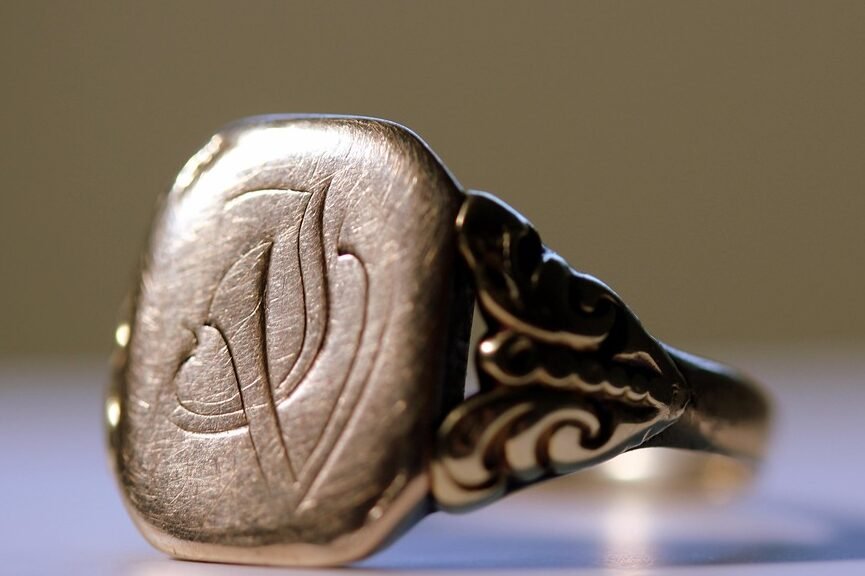
Both metals suit authentic Viking jewelry styles and wedding bands. They accept engraving and stone settings well, so buyers can choose added onyx, amber, or other stones tied to Norse symbolism. Buyers should check hallmarks for purity and prefer reputable sellers who provide weight, karat, and return policies.
Stainless Steel and Tungsten
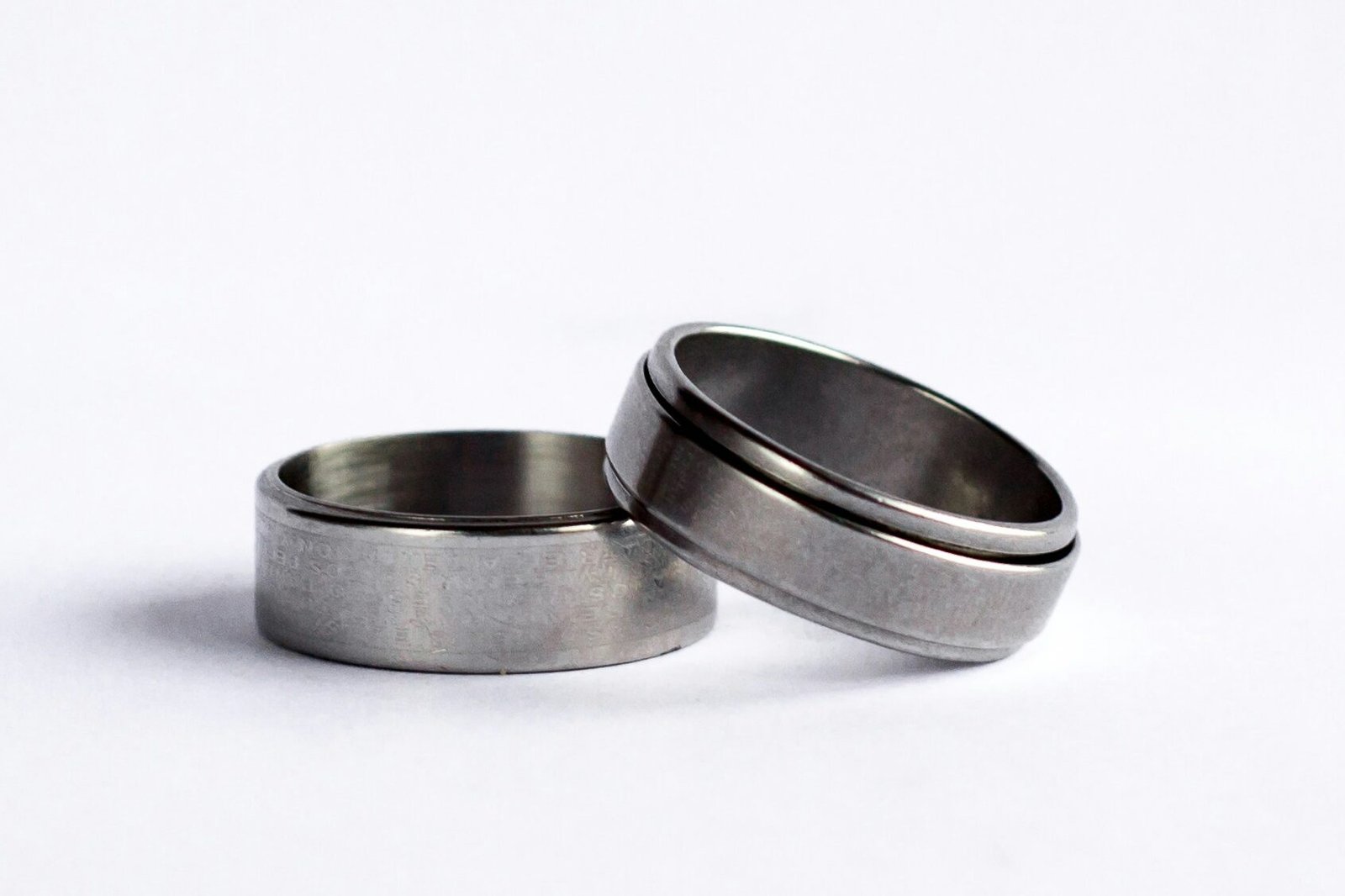
Stainless steel and tungsten provide greater scratch resistance and lower price points for men’s Viking rings. Stainless steel is corrosion-proof, lightweight, and holds sharp cast designs like Valknut or Yggdrasil patterns. Tungsten carbide is very hard and highly scratch-resistant, which keeps brushed or polished finishes intact for years.
These metals are less malleable, so resizing is difficult or impossible—buyers should verify ring size before purchase. Both metals are hypoallergenic in many cases, but cobalt or nickel alloys can cause reactions; check product specs. They pair well with black inlays, etched runes, or contrast plating for a bold Norse look.
Handcrafted Techniques
Handmade rings use techniques such as lost-wax casting, forging, and hand-engraving to create depth and authenticity. Lost-wax casting captures detailed designs, while forging and hammering add texture and a rugged finish associated with Viking rings. Skilled artisans often finish pieces by hand, polishing raised surfaces and darkening recesses to enhance contrast in knotwork and rune details.
Handcrafting affects price, uniqueness, and repair options. Custom work can match specific ring width, pattern placement, or personalized runes. Buyers should ask about the artisan’s process, material sourcing, and warranty to ensure long-term value and accurate Norse styling.
How to Choose the Best Viking Ring for Men
A good Viking ring balances fit, meaning, and how it pairs with other pieces like necklaces and bracelets. He should pick size and metal first, then check symbols and how the ring works with existing jewelry.
Finding the Right Fit
Getting the correct ring size matters more than design. He should measure his finger at different times of day and use a ring sizer or a jeweler’s measurement to avoid a band that is too tight or slips off. Wider bands need a slightly larger size than thin bands, so add about half a size for rings over 6 mm.
Consider comfort features like rounded inner edges (comfort fit) if he wears the ring daily. Metal choice affects weight and feel: sterling silver feels lighter than gold, while stainless steel is heavier and harder. Also think about durability—bronze and stainless steel resist scratches better than softer metals.
If the ring has stones or raised engraving, try it on with other pieces he’ll wear, such as a Viking bracelet, to ensure nothing rubs or catches. For wedding use, test the ring alongside a wedding band to confirm stacks sit flush.
Meaning and Symbolism
Symbols give Viking rings personal meaning and guide the choice. He can choose Mjölnir (Thor’s hammer) for protection, Valknut for courage and honor, or runes for specific words like “strength” or a name. Research each symbol’s historical meaning before committing.
Metal and finish also carry meaning. A weathered silver finish reads as authentic and rugged, while polished gold can signal status. Combining symbols—like a ring with runes around a Mjölnir motif—lets him merge heritage and personal intent.
If he already owns a Viking necklace or bracelet, match symbolism for a coherent message. For example, a Valknut ring pairs well with a necklace that shows Odin-related symbols. Mixing unrelated symbols can dilute meaning, so aim for a clear theme.
Matching with Other Accessories
Coordinate color and scale when pairing a ring with Viking necklaces or bracelets. He should pick metals that either match (all silver or all bronze) or deliberately contrast (silver ring with leather bracelet) for visual balance. Keep widths proportional: a wide ring looks better with broader bracelets and thicker chains.
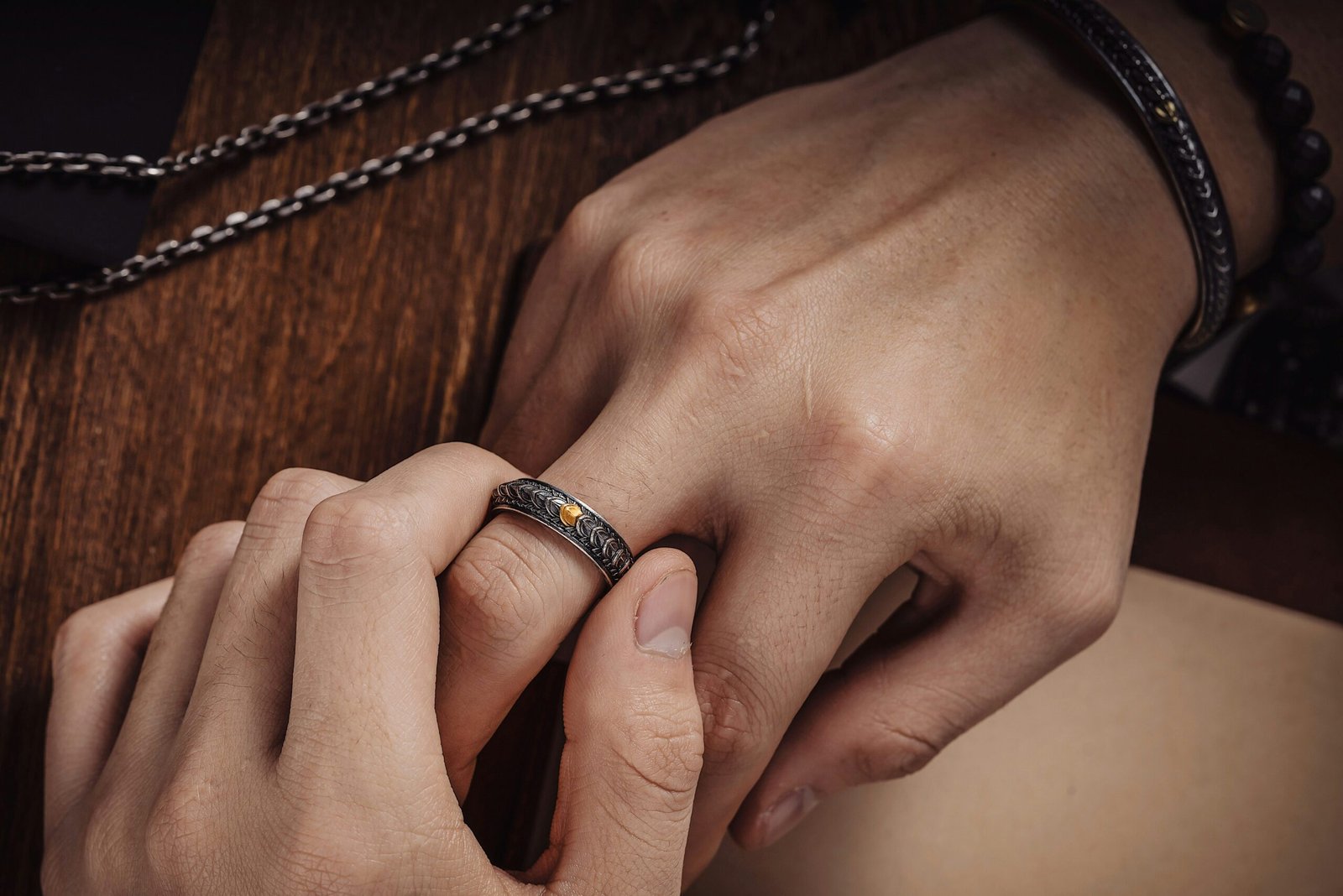
Consider texture and finish. A hammered or antiqued ring pairs well with braided leather bracelets and rustic pendants. Smooth, polished rings work with sleek chains and minimal pendants. Consistent textures make a set look intentional.
Think about placement and comfort when layering pieces. If he wears multiple rings, place bulkier rings on the middle finger and slimmer bands on the index or pinky. For daily wear, prioritize durable metals like stainless steel or bronze, and reserve softer metals or ornate pieces for special occasions.
Selecting a ring is choosing a story — make sure it speaks to your saga
Pairing Viking Rings with Other Norse Jewelry
Choose pieces that match metal, scale, and symbolism so the set looks intentional. Mix a bold ring with simpler items, or pair a slim band with more detailed necklaces or bracelets to keep balance.
Necklaces for Layering
They should match the ring’s metal and weight. A heavy silver ring pairs well with a mid-weight chain and a pendant like Mjölnir or a rune plate. Keep chain lengths varied — for example, 18″ for a close layer and 24″ for a lower pendant — to avoid tangling and let each piece show.
If the ring has runes or knotwork, pick a necklace with a similar motif rather than a conflicting symbol. For mixed metals, limit layers to two metals max and place the dominant metal closest to the face. Leather cords work with chunky rings; fine chains suit slim bands.
Bracelets for a Complete Look
Bracelets should echo the ring’s texture or theme. A braided arm ring or leather cuff complements a carved ring, while a polished metal cuff pairs with a plain band. Size the bracelet to sit near the wrist bone so it doesn’t fight the ring for attention.
Stacking works if one piece is visually dominant. For example: a statement Viking ring, a narrow silver bracelet, then a leather wrap. Match clasp styles and finishes for a cohesive appearance.
Care and Maintenance for Viking Rings
Viking rings need regular care to keep metal and details sharp. He should clean rings made of silver, bronze, stainless steel, or gold with gentle methods suited to each metal.
For daily care, they should avoid harsh chemicals like chlorine and household cleaners. Remove rings before swimming, heavy lifting, or using abrasive tools to prevent scratches and corrosion.
Use a soft cloth to wipe the ring after wear to remove oils and sweat. For silver, a mild soap and warm water bath followed by drying with a soft cloth works well. Bronze may develop a patina; gentle polishing restores shine but alters that aged look.
For deeper cleaning, soak in warm soapy water and use a soft-bristled toothbrush to reach crevices. They should not use toothpaste or abrasive pastes on softer metals. Professional cleaning suits pieces with gemstones or intricate filigree.
Store rings separately in a soft pouch or lined box to prevent rubbing and scratches. Anti-tarnish strips help for silver and bronze. For long-term care, periodic inspection of settings and joins prevents loss or damage.
Maintenance checklist:
- Clean gently with soap and water; dry thoroughly.
- Avoid chlorine, bleach, and abrasive cleaners.
- Store in soft, separate compartments.
- Get professional cleaning for gems or complex work.