You step into a universe shaped by a vast world tree, where gods, giants, and humans all live in connected realms. Norse mythology explains this universe through a clear structure that shows how life, death, order, and chaos interact across many worlds tied to Yggdrasil, the cosmic tree that holds everything together, as described in this overview of the Nine Worlds of Norse cosmology.
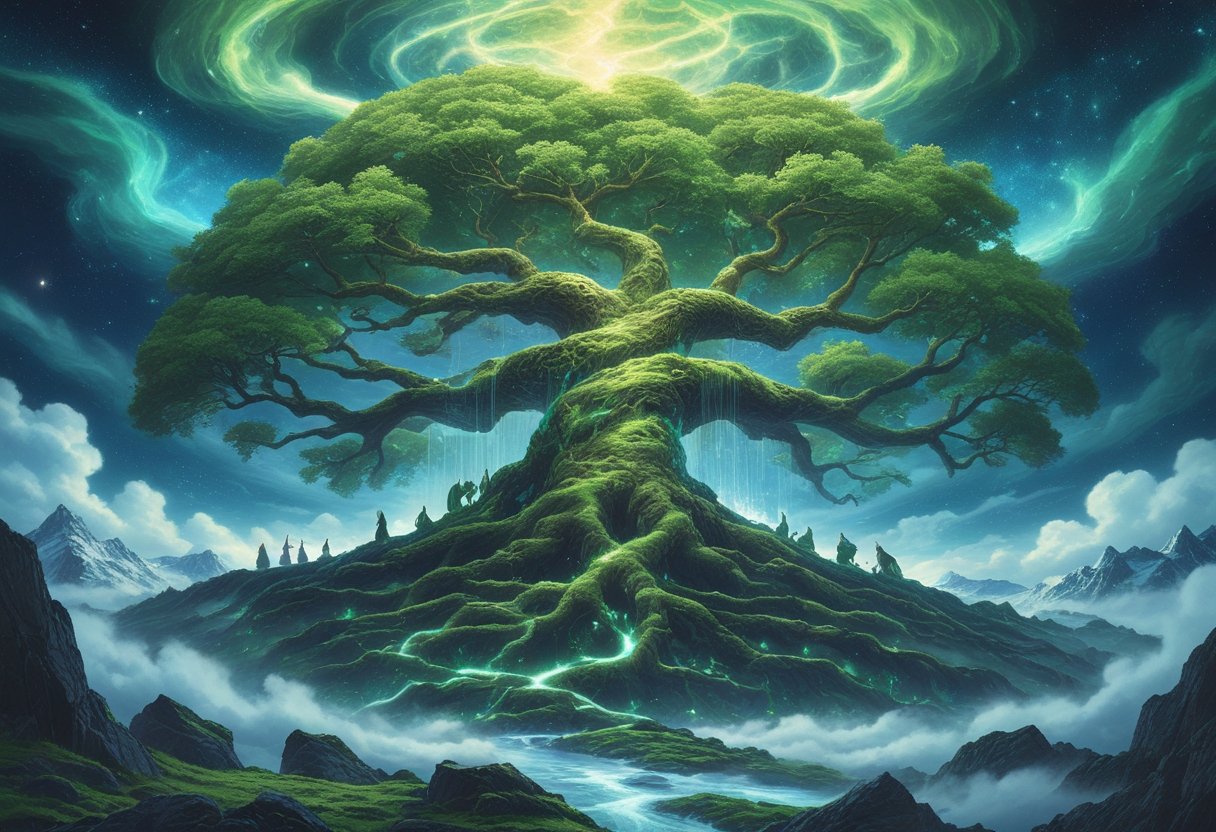
The Nine Worlds of Norse mythology are nine connected realms, each with a specific role, ranging from Midgard, where humans live, to Asgard, home of the gods, and Hel, the realm of the dead. You encounter places of fire and ice, realms of elves and dwarves, and lands ruled by powerful gods and dangerous giants, all woven into one shared cosmic system, outlined clearly in this guide to the Nine Realms of Norse mythology.
As you move through these worlds, you see how myths explain natural forces, human fate, and divine power. Each realm adds meaning through its symbols, creatures, and stories, drawing you deeper into how the Norse understood their place in the universe.
Key Takeaways
- The Norse universe consists of nine connected realms held together by Yggdrasil.
- Each world has distinct beings, gods, and symbolic meaning.
- The realms explain how order, chaos, life, and death coexist.
Overview Of Norse Cosmology
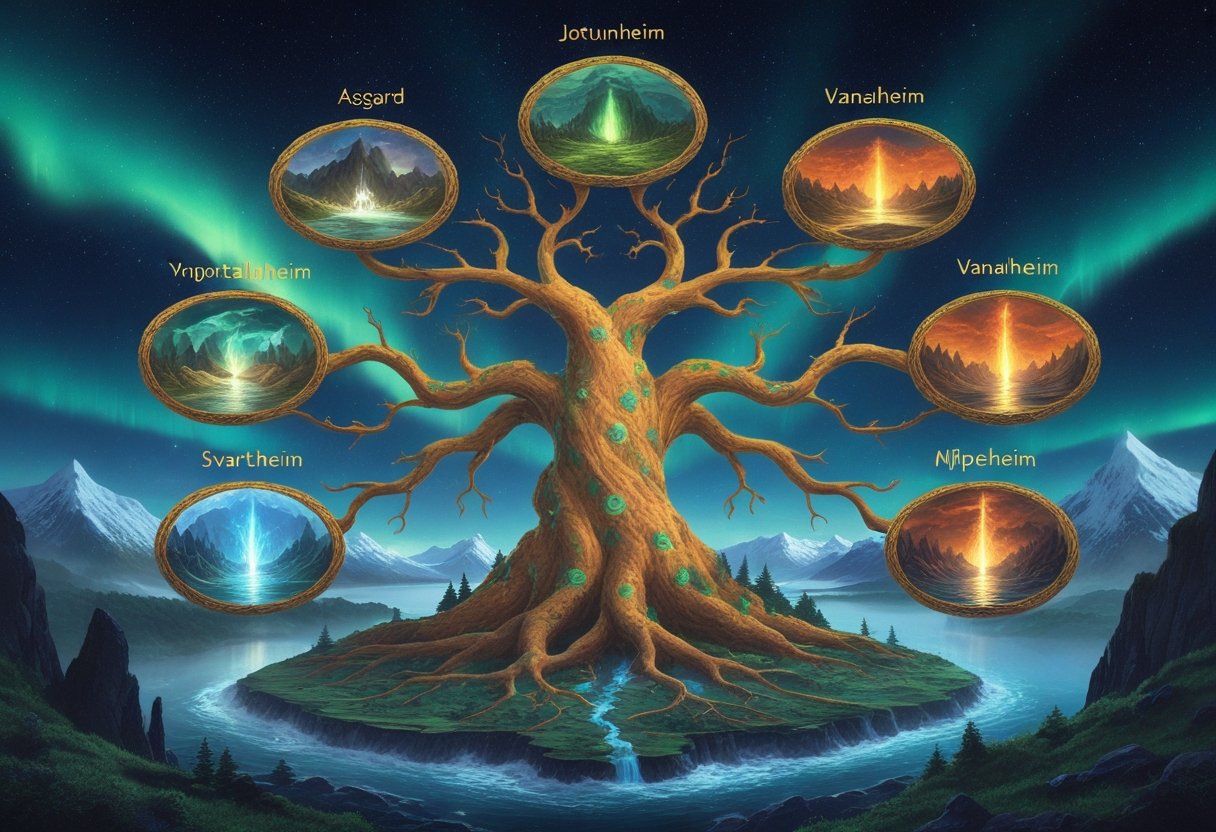
In Norse mythology, you see the universe as a living system shaped by conflict, balance, and fate. Norse cosmology comes from Old Norse poems and stories tied to Norse religion, where gods, humans, and other beings share a connected reality.
Creation begins in Ginnungagap, an empty void between fire and ice. Ice rivers called Élivágar flow from Hvergelmir, a primal spring, while heat from Muspelheim melts the ice. This clash forms the first beings and sets the structure of the cosmos, as described in accounts of Norse cosmology.
You find the Nine Worlds held together by Yggdrasil, the world tree. Each world has its own role, with myths, gods, creatures, and symbols shaping how you understand existence. Many poems assume you already know this structure, as seen in descriptions of the Nine Realms of Norse cosmology.
| World | Description |
|---|---|
| Asgard | Home of the Aesir gods like Odin and Thor; linked to order and power. |
| Vanaheim | Land of the Vanir gods; tied to fertility, wealth, and peace. |
| Midgard | Your world, where humans live; protected by walls and connected by the Bifrost. |
| Jotunheim | Realm of giants; symbol of chaos and raw nature. |
| Alfheim | World of light elves; linked to light, beauty, and growth. |
| Svartalfheim | Home of dwarves; known for craft, metalwork, and magic items. |
| Niflheim | Cold, misty world; tied to death and deep time. |
| Muspelheim | Realm of fire giants; symbol of destruction and creation. |
| Helheim | Domain of Hel; where many of the dead reside. |
You read this system not as a map, but as a way to explain life, nature, and fate.
The Nine Worlds
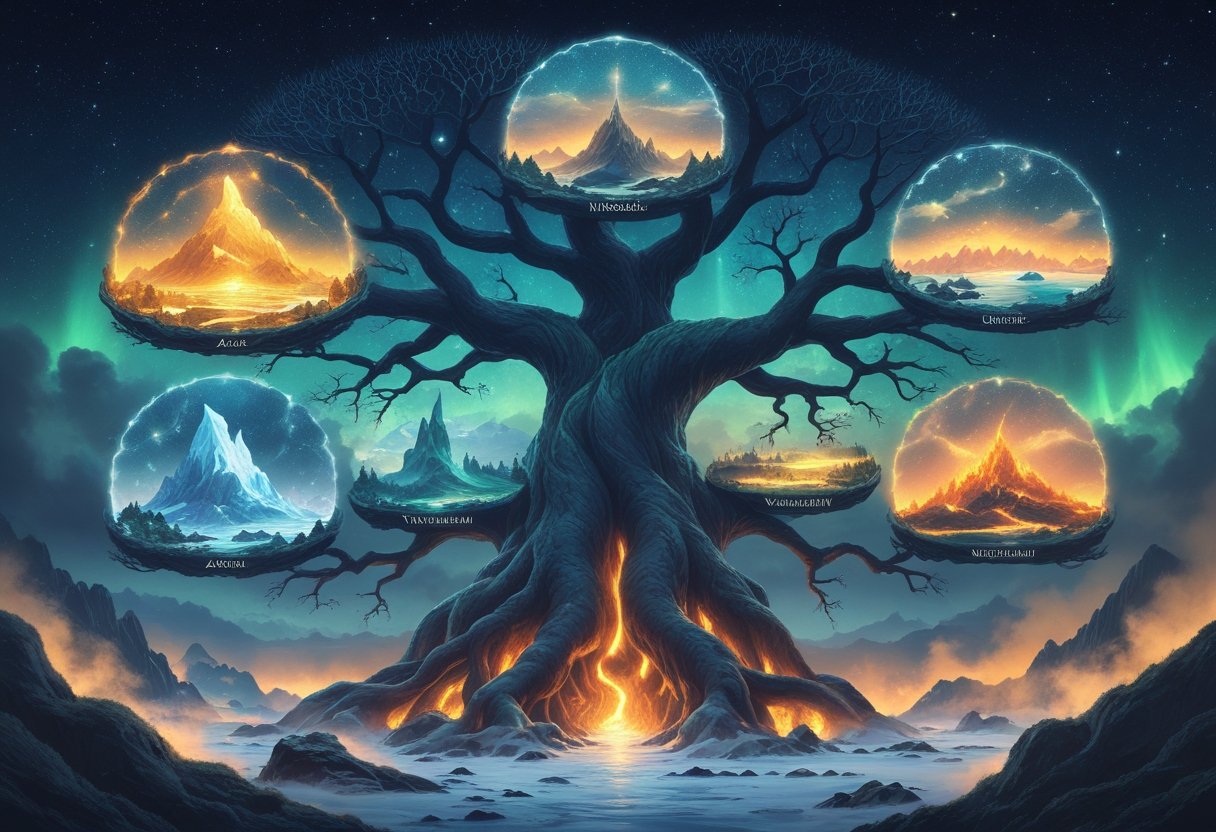
The Nine Worlds, also called the Nine Realms or Ní u Heimar, describe how Norse people understood the structure of existence. Each world has a clear role, specific beings, and strong ties to myth, fate, and daily life.
Asgard
Asgard, or Ásgarðr, serves as the home of the Aesir gods. You find Odin, Frigg, Thor, and Baldr ruling from this fortified realm above Midgard. High walls protect Asgard, and Bifrost, the rainbow bridge, connects it to the human world.
Valhalla stands at the center of Asgard. Fallen warriors train there for Ragnarök under Odin’s watch. Symbols like spears, ravens, and thunder define this world.
Asgard often appears in stories about divine order and conflict. It represents power, leadership, and cosmic responsibility within the Nine Worlds of Norse mythology.
Vanaheim
Vanaheim, or Vanaheimr, belongs to the Vanir gods. You associate this world with fertility, wealth, and natural cycles. Freyr, Freyja, and Njord come from this realm.
The Vanir once fought the Aesir, which led to a truce and an exchange of gods. This myth explains why some Vanir live in Asgard. Vanaheim connects strongly to farming, peace, and prosperity.
You often see Vanaheim as a symbol of balance with nature. It plays a key role in the structure of the Nine Realms in Norse cosmology.
Midgard
Midgard, or Miðgarðr, is the world you live in. It lies at the center of the cosmos and holds humanity. The gods built Midgard from the body of the giant Ymir and placed it within protective boundaries.
The Midgard Serpent, Jörmungandr, surrounds this world. Thor’s battles with the serpent define many myths tied to human survival. Midgard connects to Asgard through Bifrost.
This world reflects daily life, struggle, and fate. It anchors the Nine Worlds and shows how humans fit into the wider system described in Norse cosmology.
Jotunheim
Jotunheim, also called Jötunheimr or Utgard, is the land of giants. You encounter frost giants, stone giants, and powerful beings who often oppose the gods. Harsh mountains and wild forests shape this realm.
Giants represent chaos and raw nature. Loki, though tied to Asgard, traces his origins to this world. Many myths center on journeys into Jotunheim to test strength or wisdom.
Jotunheim stands outside divine order. It defines the dangers that threaten balance in the Nine Worlds of Norse mythology.
Alfheim
Alfheim, or Álfheimr, is the realm of the light elves. You connect this world with beauty, light, and subtle magic. Freyr rules Alfheim, linking it to growth and peace.
Elves influence human fate through inspiration, dreams, and protection. Myths often describe them as graceful and radiant. Alfheim sits close to Asgard in many traditions.
This world reflects creativity and unseen forces. It adds depth to how spiritual beings function within the Nine Worlds of Norse mythology.
Svartalfheim
Svartalfheim, also called Svartálfaheimr or Nidavellir (Niðavellir), is the home of dwarves. You associate this underground world with stone, metal, and craftsmanship.
Dwarves forge powerful items like Thor’s hammer, Mjolnir, and Odin’s spear, Gungnir. Their skill shapes many key myths. Darkness and firelight define this realm.
Svartalfheim represents knowledge through craft. It shows how creation and labor support the structure of the Nine Realms.
Niflheim
Niflheim, or Niflheimr, is a realm of ice, mist, and cold. You find it at one of the deepest roots of Yggdrasil. Ancient rivers flow from this world.
It played a role in creation when its ice met the fire of Muspelheim. That clash formed the first life. Niflheim also borders Helheim.
This world reflects stillness and origins. It shows how extremes shape existence in the Nine Worlds of Norse mythology.
Muspelheim
Muspelheim, or Múspellsheimr, is the realm of fire and heat. You associate it with flames, destruction, and renewal. Surtr, the fire giant, rules this world.
At Ragnarök, Surtr leads forces that burn the world. Fire from Muspelheim ends the current age and allows a new one to rise. This makes the realm both destructive and necessary.
Muspelheim defines change through force. It balances Niflheim within the Nine Worlds of Norse mythology.
Helheim
Helheim, often shortened to Hel, is the realm of the dead who did not die in battle. You find it ruled by the goddess Hel, Loki’s daughter. It lies beneath the roots of Yggdrasil.
This world is cold, quiet, and orderly. It does not serve as punishment but as a final resting place. The dead live there according to fate.
Helheim reflects acceptance of death. It completes the cycle found throughout the Nine Worlds of Norse mythology.
Gods, Creatures & Legendary Beings
You encounter many Norse gods and beings spread across the Nine Worlds. The Æsir, led by Odin, rule from Asgard and focus on order, war, and law. Odin’s brothers Vili and Vé helped shape the worlds from Ymir, the first giant born from ice and fire described in the Nine Realms of Norse mythology.
You also meet the Vanir, a second group of gods tied to nature and wealth. Njörðr, Freyr, and Freyja guide fertility, seas, and harvests, with Freyja welcoming some of the honored dead to Folkvangr instead of Valhalla.
Giants, called jötnar or jötunn, live mainly in Jotunheim. They include frost giants, fire giants, and figures like Surtr, who brings fire at Ragnarök. From these beings come monsters such as Jörmungandr, Fenris, and the wolf’s sibling threats.
Elves and dwarves shape the hidden worlds. Light elves (ljósálfar) dwell in Alfheim, while dark elves or svartálfar work beneath the earth. Dwarves (dvergar) forge weapons for gods like Thor, protector of Midgard.
You also face death and fate. Hel rules the realm of the dead, including Niflhel, guarded by Níðhöggr. A völva foretells the Norse afterlife and the final clash explained in the Nine Worlds of Norse cosmology.
Key Beings and Where You Find Them
| Being | Realm | Role |
|---|---|---|
| Odin | Asgard | Chief of the Æsir |
| Thor | Asgard | Defender of gods and humans |
| Freyja | Asgard/Folkvangr | Love and honored dead |
| Hel | Helheim | Ruler of the dead |
| Surtr | Muspelheim | Fire giant of Ragnarök |
Symbols & Connections
You understand the Nine Worlds through shared symbols that link gods, humans, and forces of nature. At the center stands Yggdrasil, the world tree, which holds every realm in place and lets life move between them. Its roots touch realms of ice, mist, and the dead, while its branches reach the homes of gods and light beings, as described in accounts of the Nine Worlds of Norse cosmology.
Travel between worlds does not happen freely. You see this limit in Bifröst (also spelled Bifrost), the burning rainbow bridge that connects Midgard to Asgard. Gods cross it with care, since giants and monsters could shatter it if they gained access.
Objects also tie the realms together through power and purpose. Mjölnir protects gods and humans from chaos, while Gungnir, Odin’s spear, never misses its mark. Draupnir, Odin’s ring, drops new rings every nine nights, echoing cycles of time and renewal across the worlds, as explained in guides to the Nine Realms of Norse mythology.
You can see these connections clearly:
| Symbol | World Link | Meaning |
|---|---|---|
| Yggdrasil | All worlds | Life, balance |
| Bifröst | Asgard–Midgard | Order, control |
| Mjölnir | Asgard–Midgard | Protection |
| Ice & Mist | Niflheim | Death, origins |
These symbols help you see how myths, gods, creatures, and worlds depend on each other.
Conclusion
You can trace the Nine Worlds through stories preserved in the Eddas, where myth explains how gods, humans, and creatures share a connected universe. Poems like Völuspá from the Poetic Edda describe creation and destruction, while Vafþrúðnismál shows Odin testing wisdom across the worlds. These texts frame the worlds as parts of one system rather than isolated places.
You see this structure clearly in Gylfaginning, written by Snorri Sturluson in the Prose Edda. He organizes the worlds around Yggdrasil and gives clear roles to places like Asgard, Midgard, and Hel. Modern summaries of this structure often follow his layout, such as this clear overview of the Nine Realms of Norse Mythology.
You also meet the worlds through action-filled poems like Þrymskviða and Skírnismál, where gods travel between realms to recover stolen objects or secure marriages. Hávamál and Hyndluljóð add moral lessons and lineage stories that tie the worlds to daily life and memory. Creatures like giants, elves, dwarves, and the dead each belong to specific realms, marked by symbols such as fire, ice, roots, and bridges.
You gain a fuller view when you compare poems, prose, and later study tools like the Dictionary of Northern Mythology. Scholarly guides and modern explanations, including this accessible breakdown of the Nine Worlds of Norse Cosmology, help you see how these myths fit together. The worlds remain distinct, but you understand them best when you view them as connected parts of one shared mythic map.
Frequently Asked Questions
These questions explain how the Nine Worlds function, who lives in them, and why they mattered to Norse society. You also see how later writers and artists continue to draw from this worldview.
What are the primary characteristics of each of the Nine Worlds in Norse mythology?
Each world has a clear role and identity. Midgard serves as the human world, shaped by land, sea, and daily survival, while Asgard stands as the fortified home of the Æsir gods like Odin and Thor, linked to order and power.
Other realms reflect extremes of nature and spirit. Jotunheim holds the giants and represents chaos and wilderness, while Muspelheim and Niflheim embody fire and ice, the oldest forces of creation described in accounts of the Nine Realms of Norse Mythology.
Realms like Alfheim, Vanaheim, and Nidavellir connect to fertility, craft, and magic. Hel serves as the realm of many of the dead and reflects fate rather than punishment, as explained in overviews of the Nine Worlds in Norse Cosmology.
How are the Nine Worlds structured within the Yggdrasil cosmology?
You understand the Nine Worlds as connected through Yggdrasil, the great world tree. Its roots, trunk, and branches form paths between realms rather than fixed locations.
Some worlds feel closer to you than others. Midgard sits near the center, while realms like Asgard and Hel align with the sky and the underworld, a structure discussed in studies of the Nine Worlds of Norse Myth.
The myths never give you a precise map. Scholars note that later diagrams remain symbolic, not literal, as explained in discussions of Yggdrasil and the Nine Worlds.
Which creatures and beings inhabit each of the Nine Worlds in Norse lore?
Each realm houses specific beings tied to its purpose. You find humans in Midgard, Æsir gods in Asgard, Vanir gods in Vanaheim, and giants in Jotunheim.
Other beings fill the lesser-seen realms. Elves dwell in Alfheim, dwarves work metal and stone in Nidavellir, and the dead ruled by the goddess Hel reside in Hel, as outlined in guides to The Nine Worlds.
Fire giants rule Muspelheim, while icy beings inhabit Niflheim. These creatures shape myths of creation, conflict, and fate described in summaries of the Nine Worlds in Norse Mythology.
What are the historical and cultural significances of the Nine Worlds in ancient Norse society?
The Nine Worlds helped you understand life, death, and nature. They explained why the world felt harsh, unpredictable, and shaped by unseen forces.
The number nine carried deep meaning. Myths repeat it in sacrifices, trials, and journeys, showing up often in poetic traditions discussed in analyses of the Nine Worlds of Norse Mythology.
These stories also reinforced social values. Honor, balance, and fate appear across worlds, reflecting how Norse communities viewed survival and responsibility.
How do the Nine Worlds connect to the overall belief system and mythology of the Norse people?
The Nine Worlds form the backbone of Norse belief. You see gods, humans, and monsters locked in a shared system where actions in one realm affect all others.
Events like Ragnarök span multiple worlds. Gods fall, monsters rise, and the structure of the cosmos resets, a theme explored in introductions to the Nine Realms of Norse Mythology.
This system shows a universe bound by fate rather than control. Even the gods cannot escape the limits set by the worlds they inhabit.
In what ways have the Nine Worlds influenced modern interpretations and representations in media and literature?
Modern stories often reuse the Nine Worlds as a fantasy framework. You see them in novels, games, and films that draw on realms like Asgard and Midgard as distinct but connected settings.
Writers adapt the worlds to fit new themes. Some focus on hero journeys, while others highlight cosmic conflict, a trend noted in discussions of Exploring the Nine Worlds.
These interpretations simplify the myths but keep their core ideas. The structure of many fictional universes still reflects the layered design of the Nine Worlds.