Vikings were seafaring people from Scandinavia who lived roughly from 800 to 1100 CE. They came from what is now Norway, Sweden, and Denmark. Most people picture Vikings as violent warriors with horned helmets, but this image is not accurate.
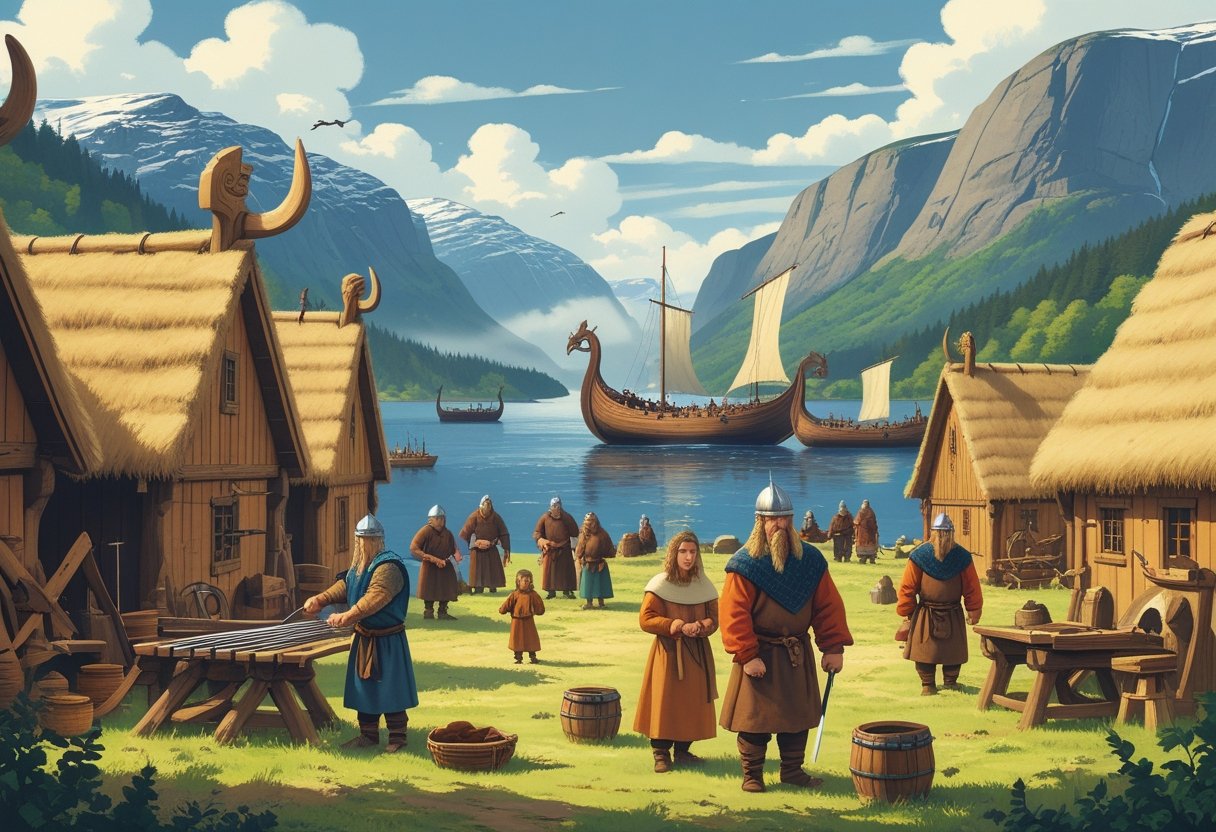
Vikings were farmers, traders, explorers, and craftspeople who built complex societies with laws, art, and advanced sailing technology. They did raid other lands, but raiding was only one part of their culture. They also established trade routes across Europe and Asia, founded new settlements, and influenced the development of many modern countries.
Understanding Vikings matters because their influence shaped European history in lasting ways. They introduced new trade networks, explored distant lands including North America, and their descendants founded cities and kingdoms that still exist today. Learning about real Viking culture helps you see past the myths and appreciate what life was actually like over a thousand years ago.
Key Takeaways
- Vikings were skilled farmers, traders, and explorers from Scandinavia who lived from roughly 800 to 1100 CE
- Viking society had organized laws, religious beliefs, social structures, and daily routines beyond just raiding and warfare
- The Viking Age ended due to political changes and religious conversion, but their legacy continues to influence modern culture and European history
Who Were The Vikings?
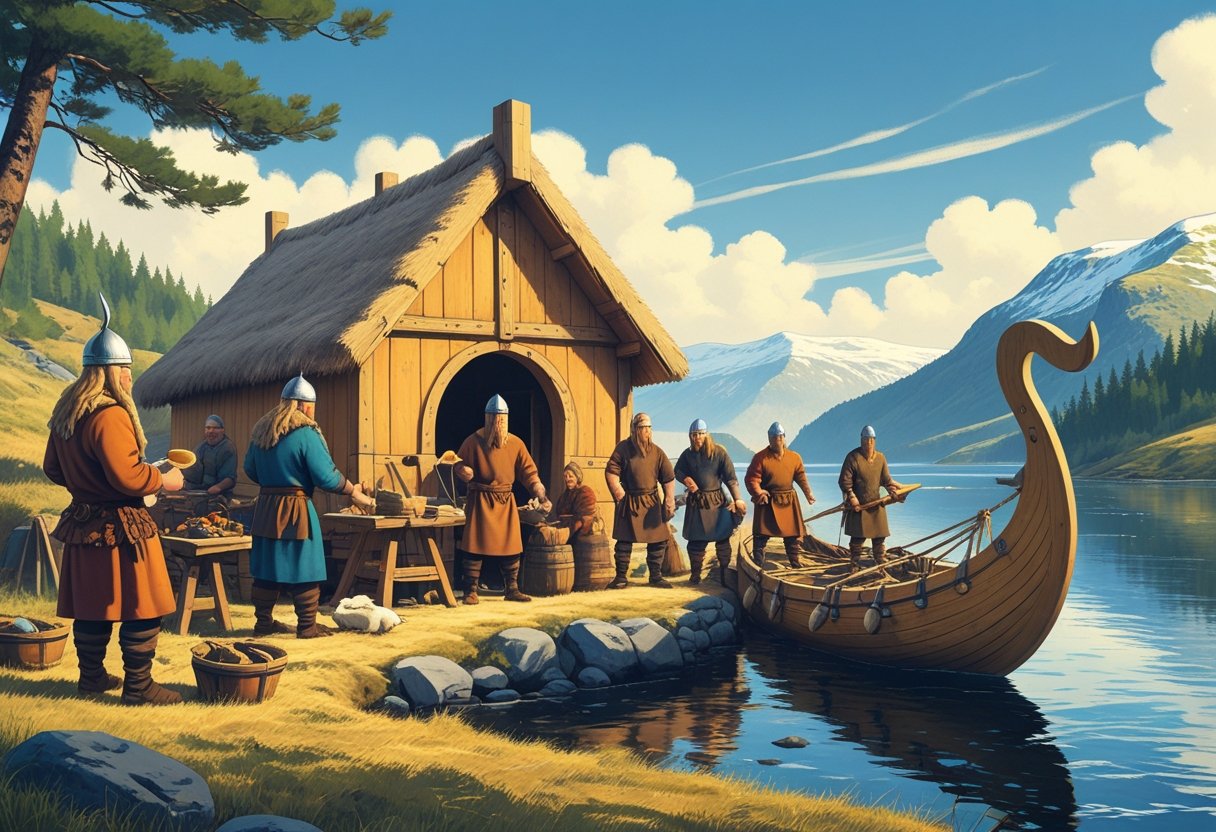
The Vikings were seafaring people from Scandinavia who lived during a specific period in medieval history. They came from what is now Norway, Sweden, and Denmark, and they traveled across vast distances to trade, settle, and sometimes raid other lands.
What The Word “Viking” Actually Meant
The word “viking” didn’t describe all people from Scandinavia during this time period. It was actually a verb that meant to go on an expedition or raid overseas.
When someone went “viking,” they were traveling by ship to trade, explore, or attack coastal areas. Most people in Scandinavia during this era were farmers, craftspeople, and fishermen who never went on these voyages. The term became associated with the raiders and traders who sailed from Scandinavian ports.
Only a small portion of the Scandinavian population actually participated in these overseas expeditions. The rest stayed home and lived regular lives in their communities.
Where Vikings Came From In Scandinavia
Vikings originated from three main regions in northern Europe. Norway occupied the western part of the Scandinavian peninsula with its mountains and fjords. Sweden sat on the eastern side with thick forests and numerous lakes. Denmark lay to the south on a peninsula and several islands.
Each region had distinct characteristics that shaped where Vikings traveled. Norwegian Vikings often sailed west to Iceland, Greenland, and the British Isles. Swedish Vikings traveled east through rivers into what is now Russia. Danish Vikings frequently targeted England and other parts of Western Europe.
The geography of these homelands influenced Viking shipbuilding and navigation skills. The long coastlines and waterways made seafaring essential for travel and survival.
The Viking Age (793–1066)
The Viking Age began in 793 when raiders attacked the monastery at Lindisfarne in England. This event marked the start of widespread Viking activity across Europe.
For nearly 300 years, Vikings sailed to many regions including the British Isles, France, the Mediterranean, and even North America. They established settlements in Iceland, Greenland, and parts of Britain. Some Vikings also traveled down Russian rivers to trade with the Byzantine Empire and Middle Eastern merchants.
The Viking Age ended around 1066 for several reasons. Many Scandinavian kingdoms converted to Christianity and became more settled. The Battle of Stamford Bridge in England marked a major defeat for Viking forces. Scandinavian societies gradually transformed into more centralized kingdoms with less emphasis on overseas raiding.
Where And How Vikings Lived
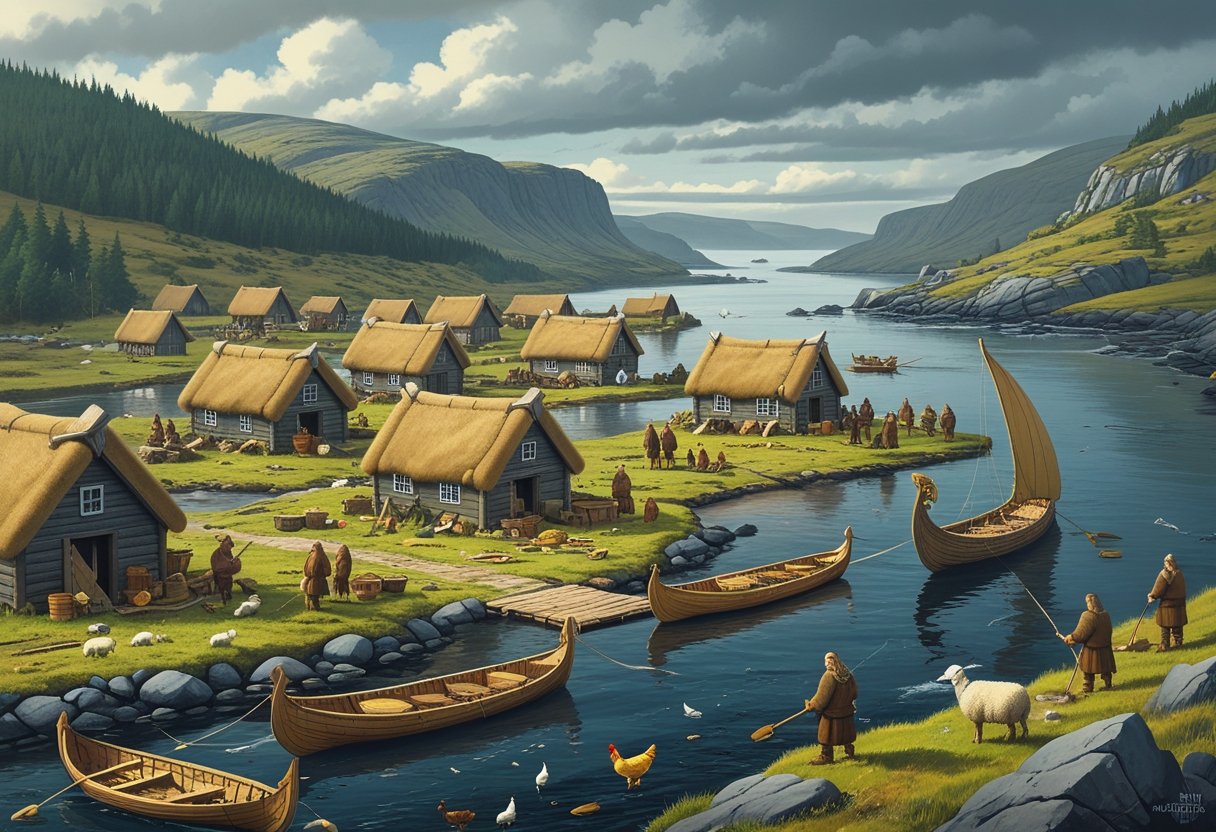
Vikings built their lives around the harsh northern climate and the resources available to them. Their settlements stretched from Scandinavia across vast territories, and their daily routines centered on farming, fishing, and adapting to long winters and short summers.
Settlements In Scandinavia
Vikings established their earliest settlements in Norway, Sweden, and Denmark. You would have found their communities clustered along coastlines, fjords, and rivers where they could access water for travel and trade.
Most Vikings lived in longhouses made from wood, stone, and turf. These rectangular buildings measured 15 to 75 feet long and housed entire families under one roof. The homes featured a central hearth for cooking and warmth, with benches along the walls that served as seats during the day and beds at night.
Small farming communities of 5 to 10 families formed the backbone of Viking society. Each settlement included homes, workshops, animal shelters, and storage buildings. The buildings sat close together for protection and shared resources.
Expansion Into Britain, Ireland, Europe, And Beyond
Viking expansion began in the late 8th century when Norse seafarers traveled beyond Scandinavia. They established settlements in the British Isles, including York in England and Dublin in Ireland. These cities became major trading centers under Viking control.
You would have seen Vikings settle Iceland starting in 874 CE, creating farming communities that still exist today. They reached Greenland by 985 CE and even established temporary settlements in North America around 1000 CE, though these didn’t last.
Vikings also founded Normandy in northern France and created trade routes through Russia. Their expansion was driven by several factors: limited farmland at home, opportunities for trade, and the search for resources.
Farming, Fishing, And Seasonal Life
Your daily life as a Viking would have revolved around farming and fishing. Most Vikings were farmers who grew barley, oats, and rye. They raised cattle, sheep, goats, and pigs for meat, milk, and wool.
Fishing provided a crucial food source, especially in coastal areas. Vikings caught cod, herring, and salmon using nets, hooks, and traps. They preserved fish by drying or salting it for winter months.
The seasons dictated your work schedule. Spring and summer meant planting crops, fishing, and trading. Fall focused on harvest and preparation for winter. During the long, dark winters, you would have worked on indoor tasks like weaving, tool repair, and craft-making while relying on stored food.
Viking Society And Daily Life
Viking society followed a clear hierarchy with three main classes, while daily life centered around farming, craftsmanship, and household management. Men, women, and children each had specific responsibilities that kept their communities running.
Social Structure: Jarls, Karls, Thralls
Viking society had three distinct social classes that determined your rights and responsibilities.
Jarls were the wealthy elite who owned large estates and controlled significant resources. They acted as chieftains and military leaders in their communities. These nobles could afford weapons, ships, and fine goods from distant lands.
Karls made up the largest group in Viking society. This middle class included farmers, craftsmen, traders, and fishermen. Karls owned their own land or businesses and had the right to carry weapons and participate in local assemblies called things.
Thralls were enslaved people at the bottom of the social structure. Vikings captured thralls during raids or inherited them. Thralls performed heavy labor like farming, building, and household work. They had no legal rights and could be bought, sold, or freed by their owners.
Roles Of Men, Women, And Children
Men typically handled farming, fishing, trading, and raiding. They represented their households at thing assemblies and made major decisions about property and warfare. Skilled men worked as blacksmiths, shipbuilders, or other specialized craftsmen.
Women managed households and had more independence than in many other medieval societies. They controlled household finances, made textiles, prepared food, and raised children. When men left on long voyages, women ran entire farms and businesses. Women could own property, request divorces, and inherit wealth.
Children started working at young ages to learn necessary skills. Boys learned farming, hunting, and fighting from their fathers. Girls learned textile work, cooking, and household management from their mothers. By their early teens, most children could perform adult tasks.
Homes, Food, Clothing, And Work
Vikings lived in longhouses built from wood, stone, or turf depending on available materials. These rectangular buildings housed entire families and sometimes livestock in one large room. A central hearth provided heat and light, while people slept on benches along the walls.
Daily diet included:
- Barley, oats, and rye as staple grains
- Preserved fish and dried meat
- Dairy products like cheese, butter, and milk
- Vegetables such as cabbage, onions, and peas
- Berries, nuts, and honey for sweetness
Vikings wore practical wool and linen clothing suited for cold climates. Men wore tunics and pants, while women wore long dresses with aprons. Both used cloaks fastened with decorative brooches.
Most Vikings worked as farmers who grew crops and raised animals. Craftsmen produced essential goods like tools, pottery, and ships. Women spent significant time spinning wool, weaving cloth, and making clothes for their families.
Viking Beliefs And Religion
Vikings practiced a polytheistic religion centered on gods who controlled different parts of life and nature. Their beliefs about fate and the afterlife influenced how they made choices and faced danger.
Norse Gods And Worldview
The Vikings worshiped many gods, each with specific roles and powers. Odin was the chief god who ruled over wisdom, war, and death. He gave up one of his eyes to gain knowledge and often appeared as a wanderer seeking information.
Thor was the god of thunder and the most popular deity among common people. He carried a hammer called Mjolnir and protected both gods and humans from giants. Farmers and warriors alike called on Thor for strength and protection.
Other important gods included Freyja (love and fertility), Frey (harvest and prosperity), and Tyr (law and justice). Vikings believed these gods lived in Asgard, one of nine worlds connected by a giant tree called Yggdrasil. Giants, elves, and dwarves lived in the other worlds.
Fate, Honor, And The Afterlife
Vikings believed in fate, which they called wyrd or örlog. They thought each person’s destiny was already determined, but you could still face it with courage and dignity.
Dying in battle was the most honorable death. Warriors who fell in combat could be chosen by Odin’s Valkyries to go to Valhalla, a great hall where they feasted and fought until Ragnarok (the end of the world). Those who died of sickness or old age went to Hel, a realm that was not necessarily punishment but simply different from Valhalla.
Honor mattered more than life itself. Your reputation and your family’s name had to be protected at all costs.
How Religion Shaped Daily Decisions
Vikings made offerings to gods before important events like voyages, battles, or harvests. They sacrificed animals and sometimes valuable objects at temples or sacred sites. These gifts were meant to earn the gods’ favor and protection.
You would wear small hammers of Thor as protective amulets. Farmers asked Frey for good crops, while sailors prayed to Njord for safe passage across the sea.
Religious leaders called gothi or gythja performed rituals and maintained sacred spaces. However, religion was not separate from daily life—chieftains often served as religious leaders too.